
What is a smart hotel system?
A smart hotel system is an IoT solution that measures room temperature, occupancy and door and window state with sensors and brings them into one dashboard. Based on this data, vacant rooms switch to an eco setting, open windows trigger alerts and energy use is reported per room.
How does it work?
Small battery-powered sensors are placed in every room. They send readings over long-range, low-power LoRaWAN to a gateway on the floor, and the gateway forwards the data to the platform over the internet.
- Sensors: measure room temperature, occupancy and door or window contact.
- Gateway: installed per floor or building, collects sensor data.
- Platform: applies rules, draws the dashboard, creates alerts and reports.
What does it measure?
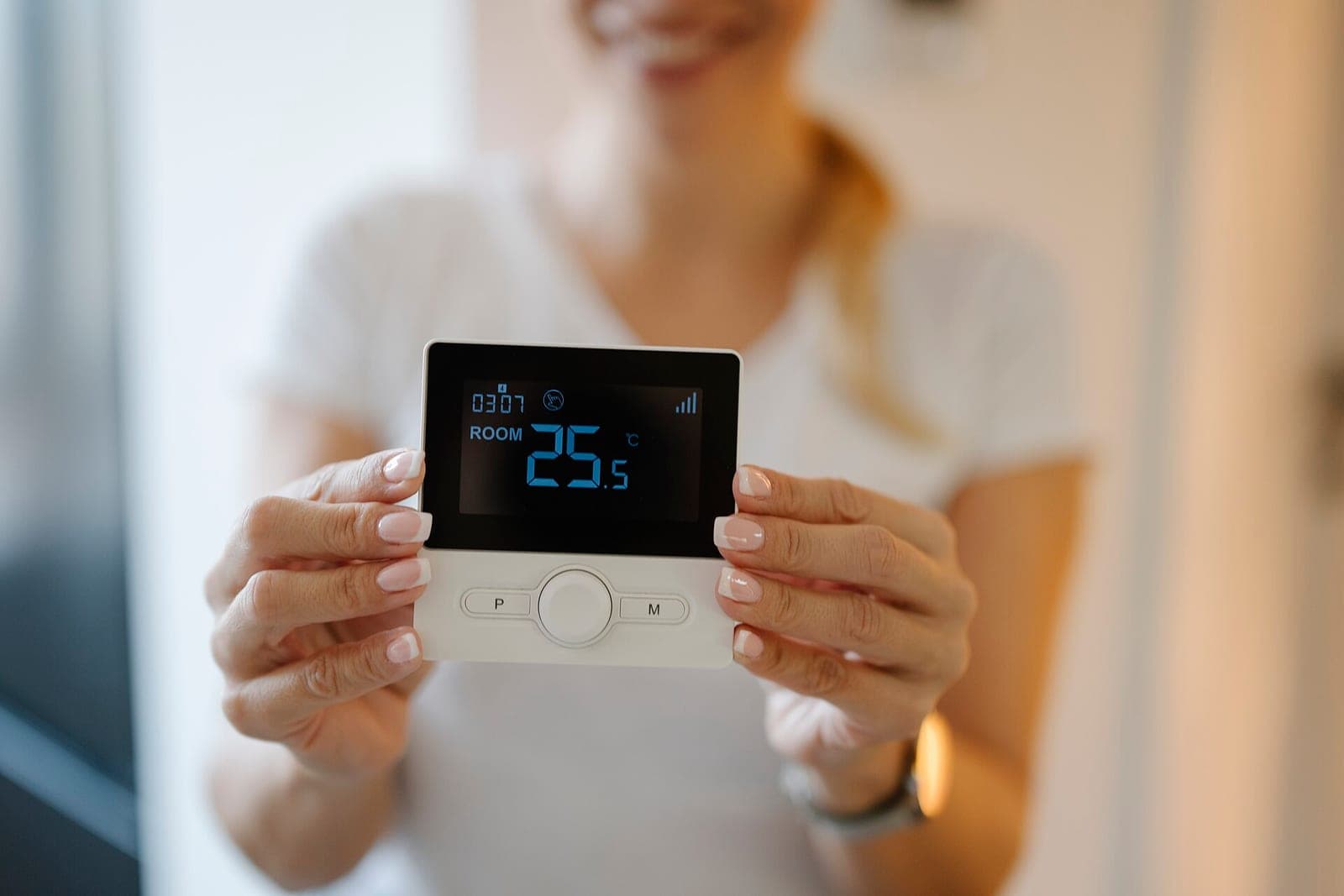
- Room temperature: to follow comfort and HVAC behavior.
- Occupancy: to see whether a room is occupied or vacant.
- Door and window state: to catch air conditioning running against an open window.
- Energy consumption: to compare rooms, floors and the whole building.
- Sensor battery level: to plan maintenance visits ahead of time.
Which method or technology should you choose?
- Passive infrared (PIR) occupancy sensor: detects motion and is simple to install; it can miss a person who sits still.
- Radar-based occupancy sensor: can pick up small movements; it needs more careful placement and tuning.
- Wireless LoRaWAN sensor: installed without drilling or cabling; reporting intervals are long, so it may not suit tasks that need instant control.
- Wired room control system: connects to the existing setup; adding sensors takes more effort.
Who is it for?
- City and resort hotels
- Boutique hotels and guesthouses
- Dormitories and lodging facilities
- Apart-hotels and serviced residences
A note on the data path: sensors send readings at set intervals, and the shorter the interval, the faster the battery drains. The interval is therefore set according to how quickly the measured quantity changes. Values shown on the demo dashboards are simulated.
How do alerts and notifications work?
Each threshold is defined as a rule: for example, an alert is created when the air conditioning runs with a window open, or when room temperature nears the upper limit. The alert reaches the responsible floor attendant by email, mobile or the dashboard.
The attendant acknowledges the alert and the event is logged. If a sensor stops reporting for a set time, the platform raises a connection-lost alert, so a silent sensor does not go unnoticed.
Integration with existing systems
Data may need to be exchanged with the property management system (PMS), the room control unit or the building management system. Interfaces such as MQTT, REST API and Modbus are used for this; which one applies is adapted to the need and settled during the survey.
Data privacy and security
An occupancy sensor only reports whether there is movement in the room; it does not collect identity, images or sound. Access to the platform is limited by user accounts and permission levels.
Whether personal data is processed and what notice obligations apply is assessed with the hotel's own privacy notice and legal counsel.
Installation process and what a quote needs
The process starts with a survey of the rooms, the floor plan and the existing HVAC and automation. A pilot with a few rooms follows, and once the results are clear it is extended to the whole hotel.
For a quote, the number of rooms and floors, shared areas, and the existing room control and hotel software are enough. Get in touch with us for details.
Highlights
Eco mode for vacant rooms
When the occupancy sensor reports an empty room, a rule can set the air conditioning to an eco setting.
Open window alerts
Air conditioning running against an open window is caught and the responsible staff member is notified.
Energy report per room
Consumption is compared by room, floor and building, and a daily report is prepared automatically.
Wireless, quick installation
Battery-powered LoRaWAN sensors are placed without drilling walls or pulling cables.
All floors in one dashboard
Room temperatures, occupancy and alerts are followed on a single screen, grouped by floor.